You work the first minute blind. You shouldn't have to.
A caller who can't say where they are or what they see. You build the whole picture from a voice — alone — while the clock runs. MyFlare hands you the one thing that's always been missing: the exact location and live eyes on the scene, the moment the Flare lands. Not another system to run. The piece that was missing.
It's already in comms centers. Running in 911 centers, sheriff's offices, and school districts — built on MyFlare Alert, Sentinel, SightDesk & Command Center, with T-Mobile for Government & INTRUSION.
"The last thing my floor needs is another system."
You're right. An overloaded room running on muscle memory doesn't need one more screen to babysit mid-call. So before anything else — here's what this isn't.
Nothing new to learn under stress
It rides on the dispatch you already work. There's no new muscle memory to build for the one moment you can't afford to be thinking about software.
You read it — you don't run it
When the Flare lands, the location and the live video are simply there. You're not operating another console mid-call; you're looking at one more pane that's already done the work.
Your CAD and radio don't change
It sits beside the tools you rely on, not on top of them. Nothing you trust gets ripped out or rerouted.
What it adds is the one thing you've never had in the first minute: you can see.
From someone who was in the worst version of the call.
Daniel Jewiss was on duty at Sandy Hook. Today he runs RAK Academy, training telecommunicators for the call no one is ever ready for — and he advises the team behind MyFlare. Here he walks through Uvalde, and where this would have changed what happened.
Daniel Jewiss — on duty at Sandy Hook · RAK Academy · MyFlare advisor. His words, not ours.
A panic button hands you a problem. A Flare hands you a response.
Same emergency, same second — the only difference is what lands on your screen.
A pin on the building. Which room, what’s happening, is it real? You still have to find out.
The exact room, live video and audio, every camera — on one screen. You’re already looking at it.
It isn’t another system to run. It’s the same truth, on every screen, moving with every unit.
The part you dread becomes the part you already have.
Watch the clock above — that's your screen. The Flare lands, and the things you'd normally fight a panicked caller for are just there.
The address, without the interrogation
No more "ma'am, what's around you?" The exact spot is pinned the instant the Flare lands — indoors, without leaning on GPS.
You see the scene
Live audio and video from the room. You're not building a picture from a shaking voice — you're looking at the real one.
Real or false — with your own eyes
You decide on what you can see, not a guess. A false alarm stands down quietly: no wasted roll-out, no full cascade for a bumped button.
Responders get the truth, not your best guess
What you see, the units get — location, picture, the lot. They arrive already knowing, and you're not relaying a blur over the radio.
What does it cost us, and what does it change? Nothing, and nothing.
No fee for the center, and nothing you depend on gets touched.
Every dispatch and telecommunicator seat is no-cost — no per-seat fee, no trial clock. Getting your floor on it never becomes a budget line anyone has to defend.
It rides on your world — it doesn't replace it.
Your CAD stays your CAD
The Flare and live feed surface beside it as one more pane of truth. Your call-handling and your records flow don't change.
The radio still rules
This adds location and live truth on top of the comms you already use. Nobody gives up the mic, nobody learns a new channel.
Fewer loops, fewer wrong doors
Less time prying an address out of panic, fewer units rolled to the wrong building, fewer false dispatches. It takes work off the floor, not on.
Not a slideshow — your console.
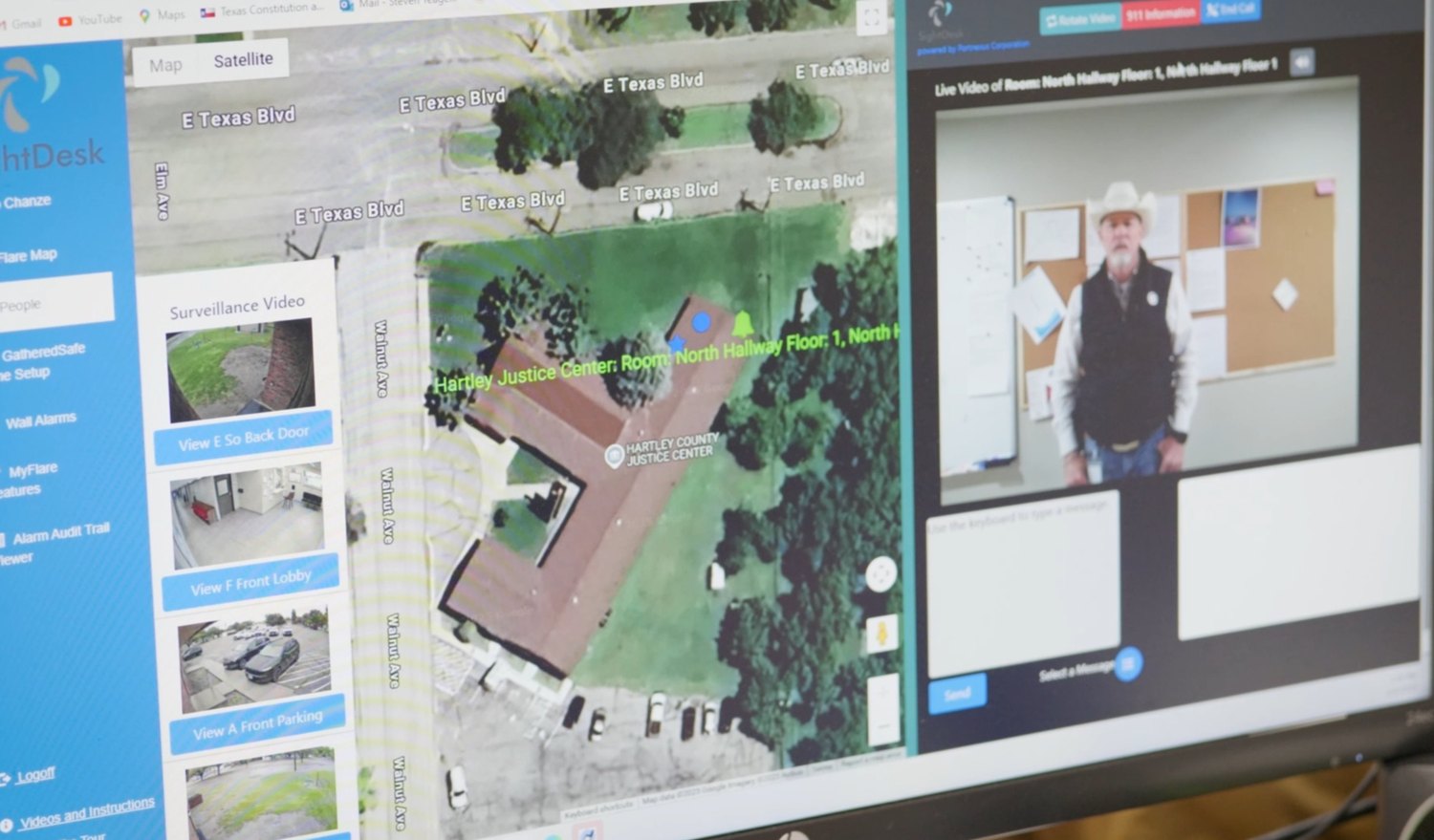
A Flare goes out, the room lights up on the map, live video opens, it's validated and handed off. This is the screen you'd be working — start to finish in well under a minute.
This is the SightDesk console — the seat you'd run. Exact location, live eyes, validate or stand down — the same cascade the clock at the top walks through, on the real platform.
See it from your seat — before you decide anything.
No commitment, no rip-out, no cost to the center. Just a look at the one thing that's been missing from the first minute — on the screen you'd actually be working.
Free for the center · We respond within 24 hours
Built with respect for the first voice every caller hears.