Safety, distributed.
Not a panic button — a pre-planned response that executes itself. An active-shooter early-warning system for schools, communities, and the people who protect them.
Already running in 911 centers, schools, churches, hospitals, courthouses, and public safety agencies — and probably already on your first responders' phones.
BUILT ON MyFlare Alert · Sentinel · SightDesk · Command Center — with T-Mobile for Government & INTRUSION
Every school-safety system shares the same flaw.
Panic buttons. Mass-notification platforms. SmartSensors. Camera AI. Each one solves a different piece — and every one of them is centralized.
In a crisis, every decision routes through one dispatcher. The first minute belongs to whoever the bottleneck can reach first.
Centralized.
One center. Every decision through it.
When one center fails, the whole network fails.
Distributed.
Anything authorized in the zone joins the response.
No single point of failure. The network is the response.
The old way has one point of failure: if the one person at the center is busy, everyone else waits. The new way doesn't have a center — so there's nothing to overload, and the response starts itself.
Improvisation under stress
When the cascade isn't preplanned, humans have to invent it in the first sixty seconds. Training degrades under adrenaline. The right decision exists — the system just doesn't make it easy to find.
Serialized comms
Every channel routes through one dispatcher's voice or screen. If the dispatcher is on another call, the second-most-urgent thing waits. In a real incident, second-most-urgent matters.
No verifiable record
When the crisis ends, the questions begin. Who knew what, when? Who acted? Centralized systems hold the evidence on the vendor's servers, in the vendor's format, on the vendor's terms.
So the question is — is there another way?
Not a panic button. A response that runs itself.
Chaos lives in the dark for only the first few seconds. Then you see. Then you hear. Then you know. Validate the situation — and decide what happens next.
From Flare to clarity — in seconds.
One activation. A rule-based cascade that puts the right awareness in front of the right people, automatically.
In seconds — clarity is restored.
The plan executes itself — every responder, every preplanned step.
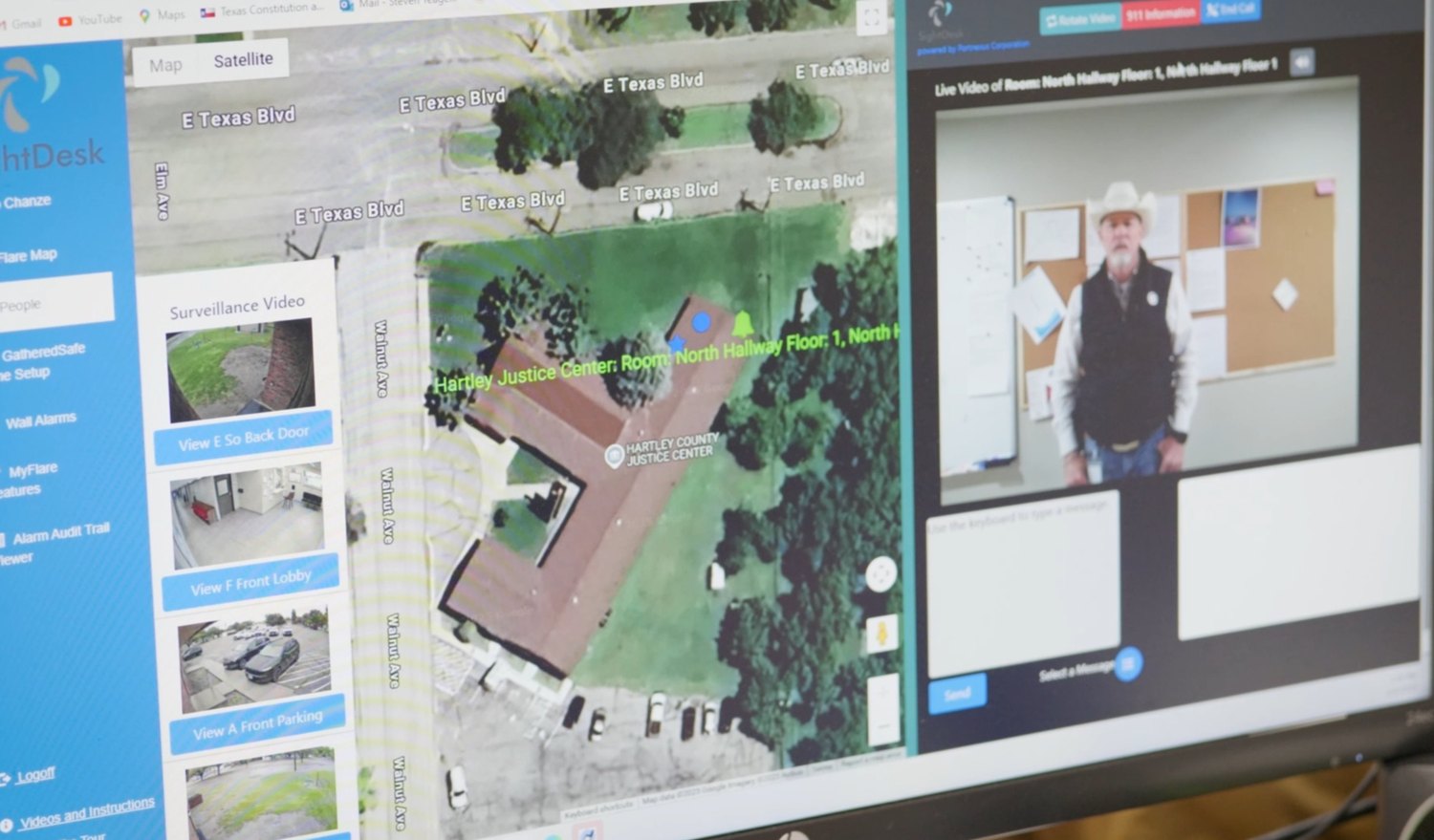
Not a diagram — the real console. A Flare is sent from a classroom SmartBoard. Dispatch sees the exact room and live video, the threat is confirmed, and the map turns from red to green as the plan runs. This is the cascade above, actually happening.
For the teacher in the room: one tap. You don't run the system — you start it.
Ending the silence of the first minute.
Gen 2 is distributed school safety.
Anything authorized inside the zone joins the response. Anywhere, anyone, anything — fixed or mobile, school-owned or not.
- 01
Distributed sensing
The four nearest IP cameras pushed to dispatch in under four seconds.
- 02
Distributed alerting
Role-routed. The right people get the right information — calm, consistent, pre-approved.
- 03
Distributed comms
Every node is two-way. No dispatcher serializes the traffic.
- 04
Distributed command
Multiple authorized commanders. Audit trail to a Dropbox you own.
And because the network is distributed — every authorized node, and every connected zone, becomes part of the response.
Seven things distribution makes possible.
Each outcome answers a different stakeholder's first objection. Together, they're why districts switch.
Costs less.
Deploys on equipment you already own — the phones, the SmartBoards, the cameras, the dispatch terminals. Your safety system was already in the building. We turn it on.
A software-only annual license. One line item. No depreciation schedule. No quote rebuild every three years when sensors age out.
The only recurring software fee — no per-building fee, no setup, no three-year hardware rebuild.
★ Law enforcement seats are always free.
Removes the question of what to do next.
Every responder, every preplanned step. The cascade is the plan, executing itself.
The right people get the right information.
Role-based routing puts every alert, every channel, every detail in front of the person who can act on it.
Your drills are the plan.
Whatever you tabletop in ICS format is what the system executes. The training your team already has becomes the response.
Every action, timestamped and recorded.
Full audit trail to your own Dropbox. "How and when did we respond?" has a precise answer at event close.
False alarms stand down silently.
Validate first, cascade second. No false 911. No community disruption. No lasting damage to trust.
One system, monthly recertified.
One license. Automated maintenance. Failed nodes are decertified until fixed. Nothing rusts.
The plan you drilled is the plan that runs.
Distribution only matters if every node is in the same plan. This lifecycle keeps the plan current, the responders trained, and the network defensible — month after month, without anyone improvising.
Plan together, in ICS format
The school, the sheriff, the EMC, and the SROs build the response together. The plan is codified once — and it's the plan the system will execute when a Flare lands.
Drill until it works
Tabletop the plan. Walk it through with everyone it touches. Fix the places where it breaks. The drill is the system learning your building.
Lock it in
Once tabletop-validated, the plan locks into the system. From this point, the cascade is authoritative. Improvisation is no longer required — and no longer rewarded.
Test every month
Monthly recertification. Every node verifies it can reach the system, run its part of the cascade, and fail safely. Nodes that fail are decertified until fixed.
Execute when a Flare lands
Confirm threat — and the plan executes exactly as everyone drilled it. No one decides anything they didn't already decide in the calm. The first minute belongs to the plan.
Recall to your custody
At event close, the full audit trail — every action, channel, and timestamp — writes to a Dropbox your school owns. The record is yours. Not ours.
The first minute belongs to the plan — not to chaos.
And because the network is distributed: as more authorized users in your community install MyFlare — off-duty officers, vendors, parents on campus — the response network grows around them, at no cost to you.
How close to zero are you?
Not zero incidents — but zero delay, zero confusion, zero unnecessary escalation, and zero unnecessary cost. Distribution is how a district gets there.
This isn't theory. It's already running.
In 911 centers, schools, churches, hospitals, courthouses, and government and commercial buildings — and it's probably already on your first responders' phones.


A walk through the platform and the operator console — the map, the live video, the messaging — in one minute.
This is what it looks like when technology supports judgment instead of replacing it.
Every district's needs are different — so the next step is clarity, not commitment.
Here's what one district said after putting it into practice.
Evaluate it on your terms. Deploy it only if it earns your confidence.
The district package includes pricing, deployment overview, configuration & governance — no obligation · We respond within 24 hours