
Ending the Silence Of The First Minute.
A district-configured emergency notification & response architecture
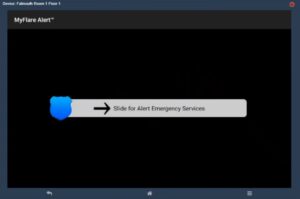
Silent or audible. Immediate or verified.
Always unified by district policy.
Already in use by 911 centers, school districts, and public safety agencies.
Immediate activation
When staff have clear awareness and action must begin without delay.
Verified workflows
When uncertainty exists and confirmation is required before broader escalation.
Both paths are governed by district policy — not vendor defaults.
Ending the silence of the first minute. By design. By policy. Before chaos decides for Anyone.

MyFlare Alert enables immediate, precise, and policy-driven response — giving districts control over how alerts activate, escalate, and communicate, before an incident ever occurs.
What MyFlare Alert is
A district-configured emergency notification and response architecture.
What it changes
Shortens time to coordinated action by enabling immediate activation, role-based messaging, and policy-governed escalation.
Who it supports
district leadership, faculty, and first responders — each within clearly defined roles.
What makes it different
Policy-first configuration, multiple activation paths into one governed response, messaging included, and predictable cost structure.
For administrators: policy control, governance, auditability, cost defensibility
For faculty: simple activation, clear instructions, no guessing under stress
For responders: faster certainty, exact location, unified communication
The First Minute Still Matters Most
In most school incidents, the most critical moment isn’t the response — it’s the first minute before action is coordinated.
Traditional safety systems often force districts into rigid outcomes that remove judgment at the moment it matters most:
Loud alarms that create confusion and unintended escalation
Broad notifications that spread before facts are known
Unverified alerts that leave leaders asking: Is this real? Where is it happening? Who needs to act — right now?
It’s not just response time —
it’s wasted time.
And wasted time compounds confusion.
MyFlare Alert gives us that minute back.
And that changes everything.
Every district is trying to get closer to zero. Zero delay. Zero confusion. Zero unnecessary escalation and zero unnecessary cost.
Multiple Ways to Activate — One Unified Response
This is what unified activation looks like in practice.
Different devices. One policy. One outcome.
Classrooms should never rely on a single device or moment.
Emergencies don’t wait for the “right” device — and classrooms shouldn’t have to either.
MyFlare Alert supports activation through tools staff already use:
Classroom Smart Boards (Sentinel)
Tablets
Mobile phones
Smartwatches
Wearable panic badges
PCs and laptops
No matter how an alert is initiated, every activation enters the same unified response architecture — ensuring consistency, accountability, and clarity across the district.
Different inputs.
One response.

All activation paths converge into one unified response — by design.
Clear, Role-Based Messaging — Governed Before the Crisis
Once a response decision is made, nothing is improvised.
MyFlare Alert enables clear, pre-approved messaging issued only by authorized roles.
Districts define message language in advance — so instructions are:
Calm
Consistent
Legally reviewed
Easy to follow under stress
Messaging can be:
Targeted or district-wide
Silent or audible
Immediate or staged
All messaging behavior follows district policy, not vendor defaults.
Whether messages are issued from a central portal or an authorized mobile device, communication remains consistent, controlled, and deliberate.


District-approved messages can be issued from portal or other authorized devices (Phones)— messaging remains consistent and controlled.
From Activation to Clarity — In Seconds
Chaos exists only until trained professionals can see, hear, and understand what’s happening — together.
Once awareness begins:
Uncertainty gives way to understanding
Understanding drives deliberate response
Control is restored
This is the moment when silence ends — and leadership begins.
This is where uncertainty collapses.

How Close to Zero Are You?
Every district is working toward the same objective:
not zero incidents — but zero delay, zero confusion, zero unnecessary escalation, and zero unnecessary cost.
Because:
Activation happens in milliseconds — faster than the blink of an eye
Response behavior is governed by district-defined policy, not guesswork
Messaging is role-based, pre-approved, and included — not unlocked later
Escalation follows defined pathways, avoiding noise, panic, and cost creep
When evaluating safety systems, it’s worth asking:
How quickly do responders gain certainty?
How much control does the district retain?
How close to zero is the first minute?
Built for District Reality — Not Venture Economics
School safety decisions are made in the real world.
Budgets tighten.
Grants fluctuate.
Expectations for readiness remain constant.
MyFlare Alert was built with those realities in mind.
Our approach prioritizes predictable, sustainable deployment — avoiding pricing escalation, feature gating, and forced churn over time.
That means:
Predictable pricing districts can plan around
Core safety messaging included — not unlocked later
No forced hardware replacements
No per-feature add-ons for essential workflows
No long-term lock-in
Just the capabilities districts actually need to respond effectively — delivered in a way that remains defensible to boards, taxpayers, and communities over time.
Because safety systems only work when schools can rely on them — financially and operationally — year after year.
We’ve prepared a full package with: District pricing breakdown Quick feature comparison Link to detailed school safety package.
Designed for evaluation — not commitment.
Includes district pricing, deployment overview, configuration options, and governance details — no obligation.
Designed for administrators, not sales pressure
Some districts prefer to explore the system directly before scheduling conversations.
The free trial provides a limited, self-guided environment to understand activation, messaging flow, and policy structure — without obligation.
Want to Explore It Hands-On?
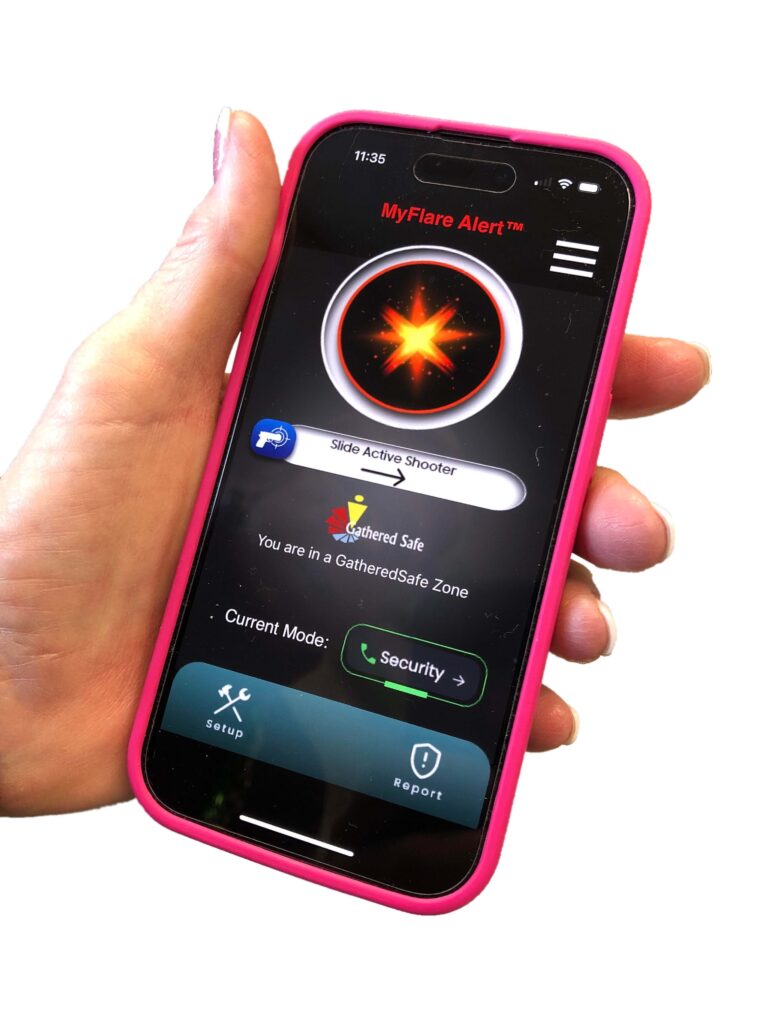
Already in Hands
This isn’t theory. It’s already running in 911 Centers, schools, churches, hospitals, court houses and government and commercial buildings to name a few use cases and it’s probably already on your first responders phones.
- Initial setup takes minutes.
- A school can be online the same day.
The Next Step
This is what it looks like when technology supports judgment instead of replacing it.
Every district’s needs are different — so the next step is clarity, not commitment.
What clarity looks like in practice.
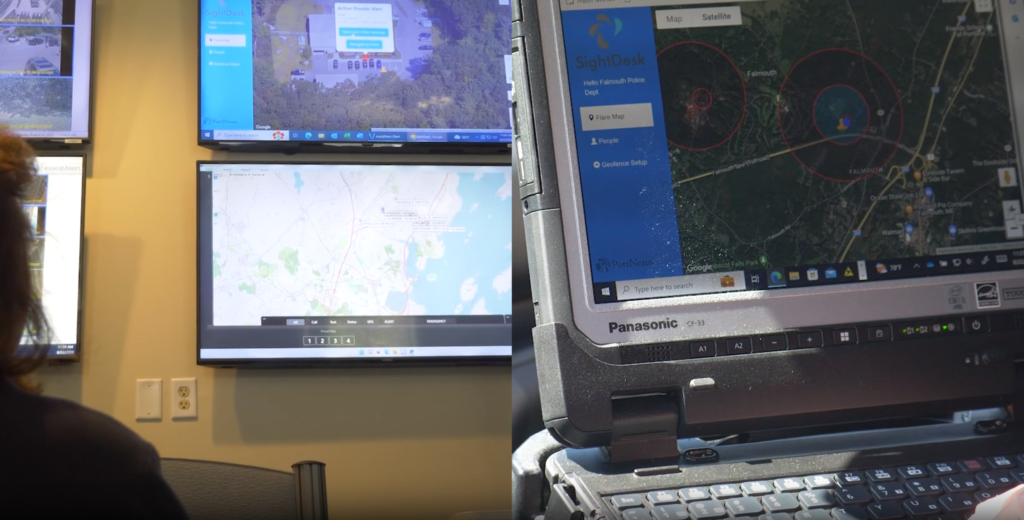

Here’s what one district said after putting it into practice.
Designed for evaluation — not commitment.
Includes district pricing, deployment overview, configuration options, and governance details — no obligation.
Designed for administrators, not sales pressure